In line with the Global Center’s 2021 Annual Report launch, a brief snapshot was developed to highlight the our organizational story, presence in the sector, and the whole-of-society approach to the work we do.
Our Space. Where do we focus and operate?
Concentrate on community level injustice, inequality, and disengagement anywhere in the world with local partners to counter conditions that breed and enable violent extremism.
Means. What is our operating model?
Programming, policy analysis, and advocacy to communities, policymakers, and influencers; strong and diverse alliances and local partnerships; independence; innovation.
Success. What makes the difference to those we serve?
Credibility and trusted expertise; informed, unbiased, high quality, and customized programs; consistent on-time project delivery; optimized funding efficiency.
Roadmap: How are we moving forward?
Enhancing awareness of our work; driving more multi-sectoral engagements to improve funding; increasing global capacity and programming; identifying and accelerating new partnerships.
Outcomes: What results do we expect from our work?
Communities that are more resilient to polarization and radicalization to violent extremism; stronger trust-based government and community collaboration that advances human rights and protects populations.
The Global Center is an implementing partner of the Strong Cities Network, which facilitates collaboration between municipal governments and civic leaders on violence prevention initiatives. Launched in 2015 at the UN General Assembly to mount a city-led response against hate, polarization, and extremism, the SCN now includes 140 local governments, from small municipalities to megacities.
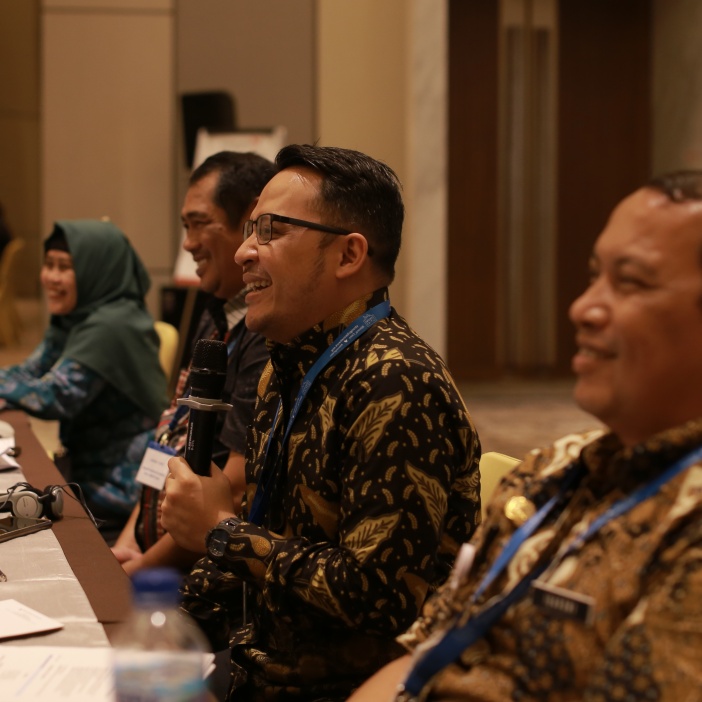
We are helping grow the network by engaging municipalities from Central and Southeast Asia; by joining, governments and civic leaders have access to regional dialogues and city visits that facilitate effective strategies across cities. As part of this work, we also allocate small grants for community-led initiatives in Indonesia, Malaysia, and the Philippines.
In addition to causing the immense suffering of the people of Ukraine, the Russian invasion has significant implications for the international normative and financial system and for peace, security, finance, and counterterrorism efforts. From the functioning of the UN Security Council to the ripple effects of sanctions and cryptocurrency to the challenges of managing the return of foreign fighters participating in the conflict – the impacts cannot be overstated. The Global Center hosted an online discussion which brought together several experts on these subjects for a panel discussion moderated by Ms. Victoria Holt (Global Center Board Director and Dartmouth University) to share their perspectives and reflections.
Dr. Kacper Rekawek (Center for Research on Extremism at the University of Oslo) reflected on the impacts of the conflict and the flow of foreign fighters to Ukraine. Mr. Colin Clarke (Soufan Center) built on Dr. Rekawek’s reflections and emphasized that governments need to be proactive in handling the fallout and challenges related to the return of these individuals by starting to prepare now. Mr. Richard Gowan (Crisis Group) discussed the impacts of the conflict on the multilateral system, particularly the United Nations. Finally, Ms. Liat Shetret (Solidus Labs) reflected on the role that cryptocurrency and cryptoassets play in this conflict and explained how the use of cryptocurrency is impacted by sanctions.
In their final reflections, the panelists offered recommendations and highlighted opportunities and challenges for the international community, including encouraging the United Nations to leverage its advantages in the non-military, non-security aspects of this conflict to help address its unintended consequences.
This brief presents key recommendations for improving civil society engagement in UN counterterrorism and preventing and countering violent extremism (P/CVE) efforts. It provides concrete steps that the United Nations and its member states can take to better engage civil society and offers a blueprint for civil society to advocate for and assert itself more consistently and effectively within the UN counterterrorism architecture, policies, and programs.
The recommendations are based on wide-ranging consultations with individuals representing diverse civil society organizations, governments, and UN entities as well a comparative analysis of relevant mechanisms for engagement between civil society and other multilateral bodies.
The Global Center is grateful to the many partners who participated in the consultations and the Government of Switzerland for its financial support. We are especially grateful to the members of the project’s advisory council.
Despite a growing volume of research on foreign terrorist fighters (FTFs), there remains limited publicly available research on the financial footprints of FTFs and the facilitation networks that support them. This typology report, produced in partnership between the Asia/Pacific Group on Money Laundering and the Global Center, examines what is known and unknown regarding the financial profiles of FTFs connected to Southeast Asia and explores the collection and utilization of FTF-related financial intelligence in the region. Persistent challenges in detecting FTF financial patterns underscore the critical importance of partnership between law enforcement, intelligence agencies, border control, and financial intelligence units.
This policy brief examines the 2021 renewal of the mandate of the UN Security Council’s Counter-Terrorism Committee Executive Directorate (CTED) and seven key issues Security Council members must grapple with as part of the renewal: (1) assessments, (2) facilitation of technical assistance, (3) research and analysis, (4) partnerships, (5) mandate expansion, (6) human rights, and (7) monitoring and evaluation.
To support Security Council members in their reconsideration of CTED’s mandate, the Global Center and the International Peace Institute undertook an extensive research and consultation process. A broad range of stakeholders were consulted, including current CTC members and other UN member states, UN representatives, and civil society actors. Information was gathered through a widely distributed survey, bilateral interviews, three focus-group discussions, and two workshops held on 28 July and 3 November 2021. Along with providing analysis of the implementation of CTED’s mandate, the intention was to provide an informal Track II setting for member states and other stakeholders to engage on priorities for the mandate renewal and to solicit input into the formal negotiation process from underrepresented parties, including civil society. This brief outlines findings and recommendations for the renewal of CTED’s mandate, building on this research and consultation process.
This year’s 76th Session of the UN General Assembly aligned with the twenty-year anniversary of the September 11th attacks, giving heightened significance to the annual multilateral discussions. The Global Center team produced a range of commentaries, resources, and analyses that speak to counterterrorism policy over the last two decades and prospective future of counterterrorism.
In an article in The Hill, Executive Director Eelco Kessels reflects on the twenty years since September 11th to underscore the urgency of restoring human rights and centering civil society in global security efforts.
In a Just Security article, Global Center staff reflect on the seventh review of the UN Global Counter-Terrorism Strategy and progress on issues within the United Nations since 2001. And in an IPI Global Observatory article, Legal Analyst Annabelle Bonnefont highlights the need for more meaningful engagement with civil society by the UN as part of its counterterrorism efforts.
Executive Director Kessels delivered remarks as part of the Special meeting of the Counter-Terrorism Committee commemorating the 20th anniversary of the adoption of Security Council resolution 1373 (2001) and the establishment of the Counter-Terrorism Committee.
Finally, the Global Center spotlighted these pieces, additional resources, and reflections from several Advisory Council members on our social media channels using #20YearsofCT.
The 20th anniversary of the September 11th attacks compels the international community to take stock of the past two decades of counterterrorism policy and ask: Have these efforts made us safer, and at what cost?
This opinion piece in The Hill penned by executive director Eelco Kessels reflects on the twenty years since September 11th to underscore the urgency of restoring human rights and centering civil society in global security efforts.
The threat of terrorism today is more diverse, diffuse, and decentralized than ever before. At the same time, the growth of counterterrorism has spurned the unraveling of hard-won human rights protections and democratic norms and the shrinking of civic space. There is no evidence indicating that these restrictions reduce terrorist attacks; quite the opposite, they may in fact help galvanize radicalization and recruitment.
Twenty years after 9/11, the upcoming 76th Session of the United Nations General Assembly in September is sure to be a time for reflection on UN and global efforts to counter terrorism and prevent the spread of violent extremism. However, insights for the upcoming discussions can already be gleaned from the recent negotiations and seventh review of the UN Global Counter-Terrorism Strategy. The seventh review resolution, adopted by the General Assembly on June 30, shows both the progress that has been made since 2001 and reveals the many challenges that still lay ahead. In this Just Security article, Eelco Kessels and Melissa Lefas argue that while the adoption of the seventh review resolution demonstrates a commitment to consensus, a closer inspection reveals significant cracks in the global approach.
This brief explores how civil society is included in national frameworks to prevent and counter violent extremism at different stages of the policy cycle, including in design, development, implementation, monitoring, and evaluation. In doing so, the analysis contributes to a stocktaking of how international recommendations on civil society inclusion are reflected in such documents. In analyzing how national frameworks have included civil society, this brief identifies positive examples that may be useful to national authorities in considering the range of ways in which future frameworks can draw on the valuable contribution of civil society.