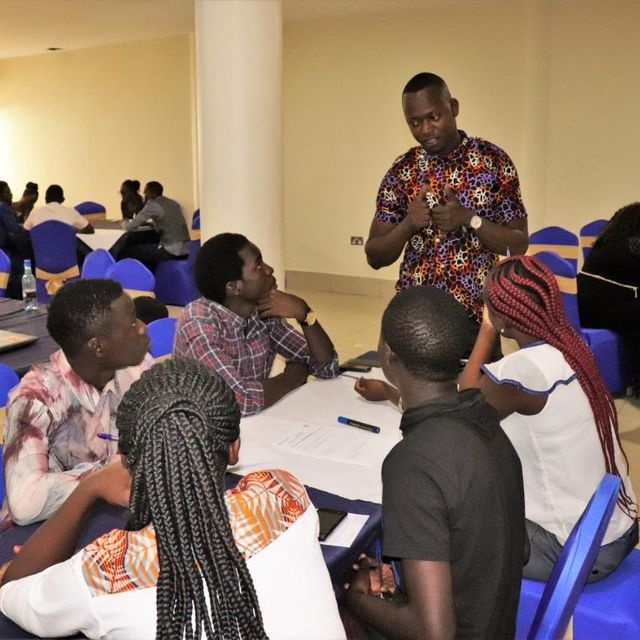
Enhancing Civil Society Engagement

Following the first UN High-Level Conference of Heads of Counter-Terrorism Agencies of Member States in June 2018, the UN Office of Counter-Terrorism (UNOCT) organized seven regional high-level conferences to “keep up the momentum on key counter-terrorism issues … strengthen international cooperation … [and] pro¬mote implementation of the [United Nations] Global Counter-Terrorism Strategy and relevant General Assembly and Security Council resolutions.” To help bolster civil society engagement as part of that process, UNOCT partnered with the Global Center to organize two one-day, civil society–led workshops preceding the last two regional conferences, in Abu Dhabi on 17 December 2019 and Vienna on 10 February 2020.

This paper summarizes the key outcomes of those discussions. It highlights some of the contributions of civil society to advance implementation of the Strategy in the areas of prevention, intervention, and rehabilitation and reintegration. It identifies challenges and proposes a series of recommendations for states, intergovernmental bodies, and civil society to enhance engagement on counterterrorism and preventing violent extremism by 1) creating an enabling environment for civil society, 2) supporting its financial and organizational capacity, and 3) engaging it in relevant policy formulation and implementation processes at all levels.

In the lead up to the 2020 Virtual UN Counter-Terrorism Week, the Global Center launched the summary findings and key recommendations of the fifth iteration of its Blue Sky report series. With the generous support of the governments of the Netherlands, Norway, and Switzerland, the report builds on the Global Center’s previous analyses of the UN’s counter terrorism efforts. The key recommendations of the report suggest concrete ways the United Nations can better leverage its comparative advantages to improve policy development, inter-agency coordination, delivery, and impact of counterterrorism and preventing violent extremism efforts in a manner that systemically accounts for human rights and civil society engagement.

The Global Center’s Executive Director Eelco Kessels and Chief of Strategy Melissa Lefas were joined by Assistant Secretary-General Michèle Coninsx, Executive Director, UN Counter-Terrorism Committee Executive Directorate; Mr. Raffi Gregorian, Deputy to the Under-Secretary-General and Director, UN Office of Counter-Terrorism; Professor Fionnuala Ní Aoláin, Special Rapporteur on the promotion and protection of human rights and fundamental freedoms while countering terrorism; Professor Willibroad Dze-Ngwa, University of Yaoundé I, Africa Network against Illiteracy, Conflict and Human Rights Abuse, Cameroon; and Ms. Mai E’Leimat, Founder and CEO of Edmaaj, Development and Social Responsibility Consulting, Jordan. Ambassador Stephan Husy, Ambassador-at-Large for International Counterterrorism, Switzerland opened the event and Mr. Huib Mijnarends, Special Envoy on Counter-Terrorism, the Netherlands, delivered closing remarks.

Recognizing the importance of reinforcing the promotion and protection of human rights and the rule of law underpinning the Strategy and that the United Nations places a renewed focus on policy leadership and coordination to support the Strategy’s implementation, embedded in the wider peace and security pillar, Blue Sky V hones in on four focus areas:

• Calibrating the UN Counterterrorism Architecture
• Situating UN Counterterrorism Efforts Within the Prevention Framework
• Engaging and Supporting Civil Society and Mainstream Human Rights
• Assessing the Implementation of the Strategy

The panelists reflected on the report’s summary findings and recommendations, joined by over 175 participants via Zoom and YouTube livestream.

For more information about the Blue Sky process and report, please contact Ms. Franziska Praxl at fpraxl@globalcenter.org.

Through our work around the world, we witness how young people are primary targets of armed groups of all stripes. This is notably true for violent extremist networks, which tend to focus their recruitment on individuals between 15 and 30 years old. This is evident among al-Shabaab and Boko Haram in Kenya and Nigeria, respectively, which capitalize on young people’s sense of economic, social, and political marginalization and despair.

Young people also play pivotal roles as leaders for positive change. Both Kenya and Nigeria have a vibrant, youth-led civil society landscape, which has proven critical to building and sustaining resilient communities. Yet civil society—particularly youth people—working in communities impacted by violent extremism often struggle to secure and sustain the funding required to maintain long-term programming and establish formal organizations. Many civic and nonprofit leaders are not connected to regional or national communities of practice, much less international networks—hindering their ability to contribute to and capitalize on peer expertise and resource-sharing.

It is in this context that we recognized the opportunity to invest in the next generation of change-makers and peacebuilders in Nigeria and Kenya. With a focus on organizations in regions with high levels of violent extremist activity, we made a multi-year commitment to twenty grassroots violence prevention initiatives, including through the provision of small grants, capacity development, and networking and mentoring opportunities. Our partnership effectively equipped youth Nigerian and Kenyan leaders with the skills, networks, and resources to address community grievances, stand up localized communities of practice, and ultimately stem the growth of extremist violence.

Our capacity development and training programs draw heavily on train-the-trainer and other peer-to-peer models to help ensure ownership by participants as well as the sustainability of these programs after our role formally ends. These workshops included an innovative peer exchange: Kenyan facilitators traveled to Nigeria and Nigerian facilitators traveled to Kenya, with both leading workshops to share their insight into combatting the strategies and methods used by al-Shabaab, Boko Haram, ISIS, and al-Qaeda. The program presents a successful new model for grantmaking that foregrounds hyper-local community and youth engagement as requisites in preventing violent extremism. Further, the framework for pairing regions and countries on the basis of shared experiences is easily replicable.

The Global Center received the Innovators Award in Global Affairs in the Security & Defense category, for addressing the root causes of violent extremism with innovative, inclusive, and human rights-based policies, partnerships, and practices. The Awards, sponsored by Network 20/20 and Young Professionals in Foreign Policy, recognize those individuals and organizations at the forefront of delivering pioneering solutions to global policy challenges in the fields of sustainability, civic engagement, security, humanitarian aid, and financial inclusion.

“The Innovators Award is an encouraging testament to our dedicated team of young professionals and their work with community groups and youth organizations all across the world,” said Global Center Executive Director Eelco Kessels. “It highlights the impact that our organization and global network of experts have in a field where outdated, security-driven approaches often stand in the way of lasting solutions that are driven by communities and address real grievances.”

As the Global Center moves into a new stage of growth and development, we ask for your support to remain agile, independent, and innovative, ensuring that our programs reach those that most need our support and can make a difference in their communities.

We hope you will join us in this important effort. Please click on the See More button to learn how you can support our work, or contact info@globalcenter.org for more information.

Over the course of the 74th Session of the UN General Assembly, the Global Center hosted, presented, and participated in numerous events and functions aimed at advancing effective policy and practice around countering violent extremismcriminal justice and rule of law, and financial integrity and inclusion.

From organizing a panel on safeguarding civil society and humanitarian operations while countering terrorism at the Global Counterterrorism Forum (GCTF) to co-hosting a discussion on youth engagement and resilience against violent extremism in the Sahel, the Global Center was able to demonstrate the impact of its work on justice, security, and development, and highlight its cooperation with partners such as Senior Fellows Maji Peterx (Alternatives to Violence Project Lead Facilitator and Carefronting Nigeria Coordinator) and Phyllis Muema (Executive Director, Kenya Community Support Centre).

Global Center Reception: Celebrating Fifteen Years of Impact

At our annual reception, the Global Center celebrated its fifteen-year anniversary and welcomed existing and new partners to look ahead to an exciting new phase of growth and development. Thank you to all those who joined us in celebrating on 25 September, and a special thank you to our wonderful partners and incredible host Baker McKenzie for making the reception a success.

GCTF Panel Discussion: Safeguarding Civil Society and Humanitarian Operations

Global Center Executive Director Eelco Kessels moderated a session on “Safeguarding Civil Society and Humanitarian Operations while Countering the Financing of Terrorism,” convened during the Sixteenth GCTF Coordinating Committee Meeting. The panel was organized by the Global Center in partnership with the Governments of the Netherlands and Morocco, GCTF Co-Chairs. It featured a diverse range of experts to discuss the impact of countering the financing of terrorism (CFT) on civil society and humanitarian spaces and consider ways in which CFT aim could be furthered without harming civil society and humanitarian operations. Remarks of one of the panelists—the UN Special Rapporteur on the promotion and protection of human rights and fundamental freedoms while countering terrorism, are available here.

Two Sides of the Same Coin? Operationalizing Linkages between the SDG 16 and PVE Agendas

The Global Center, the Prevention Project, and the International Civil Society Action Network co-hosted an event to explore the linkages between Sustainable Development Goal (SDG)16 and preventing violent extremism (PVE) Agendas. In welcoming remarks, Rafia Bhulai, Global Center Senior Programs Officer, cautioned that the PVE lens may not be the most appropriate or useful way through which to address many of the SDG16 targets, but that carefully considered and relevant efforts could help advance mutually reinforcing elements of the peace, security, and development agendas. Specifically, she proposed two areas of complementarity between the two agendas – by curbing illicit and terrorism finance and by promoting access to justice for all. The Global Center will further explore these issues in a forthcoming article.

Youth Engagement and Resilience against Violent Extremism in the Sahel

The Global Center, the International Centre for Counter-Terrorism – The Hague, and the United Nations Interregional Crime and Justice Research Institute – in collaboration with the Danish Ministry of Foreign Affairs and the Permanent Mission of Senegal to the United Nations – organized a panel on the critical role that youth play across the Sahel in preventing and countering violent extremism (P/CVE). The event was organized to provide a platform for young leaders and their advocates to directly address policy makers, implementing partners, and donors on how to better support them in their P/CVE effort and to address persistent challenges and promising interventions. Maji Peterx, Global Center Senior Fellow and Alternatives to Violence Project Lead Facilitator and Carefronting Nigeria Coordinator, provided his experiences working with youth on P/CVE efforts. A meeting summary details key takeaways from the discussion.

New Perspectives on Violent Extremism in Africa

Tracey Durner, Global Center Senior Analyst, reflected on the findings of a survey by the Institute of Security Studies of 281 P/CVE projects in East, Central, and West Africa during a panel discussion hosted at the European Union Delegation to the United Nations. She noted an increasing disconnect between the structural drivers of violent extremism often cited on the continent, and programming responses that emphasize community dialogue and awareness raising. She also highlighted the negative impact that ad-hoc, project-based funding has on the strength and core capacity of local actors. These findings draw on the Global Center’s experiences supporting the East Africa Civil Society Organizations Hub and providing small and medium grants to grassroots civil society organizations to design and implement P/CVE programming in their communities.

___________________

For insights on all the events the Global Center participated in, please visit our twitter page, https://twitter.com/GlobalCtr.

This report contains a comparative evaluation of national strategies to prevent and counter violent extremism, to explore how they reflect recommendations and good practices outlined by the United Nations. Drawing upon a sample of 19 national strategies, the report analyzes the procedures and standards of policy planning that underpin the development of countries’ strategies. Using the guidelines of the UN Office of Counter-Terrorism’s “Reference Guide: Developing National and Regional Action Plans to Prevent Violent Extremism” as a common analytical framework, the report is organized around the six procedural components outlined therein as essential in developing inclusive, context-specific, and robust national strategies.

Based on this comparative analysis, the report provides a number of recommendations related to each of the six procedural components analyzed. It is hoped that these recommendations will help guide countries as they develop new or optimize existing strategies in line with international norms and common standards of promising practice and in turn design more effective national strategies to prevent and counter violent extremism.

History offers plenty of examples of female involvement in political violence, but a certain fascination and disbelief continue to surround female violent extremists because women are often still viewed as homemakers and mothers, surprising society by the number of young girls and women joining the Islamic State of Iraq and the Levant. This policy brief explores the drivers of radicalization to and engagement in violent extremism and the factors of disengagement and desistance among women and girls by examining cases of individuals that went through the United Kingdom’s Channel program. Channel cases were chosen for this analysis because it is one of the longest running (since 2007) and most documented early intervention programs developed specifically to prevent engagement with terrorism and violent extremism. It aims to enhance understanding of gender-sensitive interventions that address the specific needs of women and girls. Recommendations include the focus on mechanisms for women and men to claim their rights and have their grievances heard while ensuring accountability mechanisms are in place and the need to more effectively combine online and offline preventing and countering violent extremism actions.

Over the past decade, security actors in Kenya and the international community have increasingly viewed young people in Kenya’s Muslim communities as vectors for radicalization to violent extremism. A number of large scale economic development assistance programs in the country, even as they promote the intense free market entrepreneurialism that continues to leave the vast majority of Kenyans behind, are also increasingly taking on preventing violent extremism objectives. Against the backdrop of heightened international and domestic concerns over the vulnerability of Kenyan youth to violent extremism, this policy brief focuses on the hardships and priorities of youth in Kenya through the voices of young people themselves. Drawing on a series of focus group discussions conducted by the Kenya Community Support Centre in September 2018, the paper explores the daily challenges confronting young people in Mombasa County as they struggle to make ends meet in the face of joblessness, wage theft, nepotism, and political corruption. While the serious threat posed by al-Shabaab cannot be ignored, the paper argues that the overriding drive to prevent violent extremism among Kenyan youth, especially in Muslim and Somali communities, is not only disproportionate but also counterproductive, threatening to overshadow the overwhelming need for economic justice, governance accountability, and reform.

Structural factors that can fuel support for violent extremism, like corrupt governance and inequality, are often intertwined with individual-level vulnerability factors, such as a search for identity or a need for quick answers to issues of injustice. Under these circumstances, individuals can be drawn to black-and-white answers that seem to offer simplicity, clarity, and certainty. Unfortunately, a hallmark of violent extremist ideologies is this binary thinking, stripped of complexity and with an identifiable in-group/out-group dynamic that offers a sense of community and belonging to help people make sense of the world. As policymakers and practitioners work to address the larger structural factors fueling violent extremism, psychological interventions may help address the binary construct of thinking that can make violent extremist ideologies sound appealing at the individual level. This policy brief explore the concept of integrative complexity – an empirical, peer-reviewed, and cross-culturally validated measure of the complexity of thinking – and the ways it can be applied in contexts of violent extremism and other instances of intergroup conflict.

The Compendium of Good Practices in the Rehabilitation and Reintegration of Violent Extremist Offenders presents good and promising practices in the rehabilitation and reintegration of violent extremist offenders (VEOs) in correctional settings, while also discussing how practices related to prison regime, security, intelligence, and risk assessment can impact these two processes. The compilation endeavors to (1) inform understanding and improve decision-making regarding the implementation of approaches for the rehabilitation and reintegration of VEOs, specifically in the correctional services of Australia, Canada, New Zealand, the United Kingdom, and the United States, although it has value in other jurisdictions; (2) integrate established with emerging promising practices in this field; (3) translate key existing documents into an applied and accessible resource for use by various stakeholders; and (4) include good and promising practices associated with women, juveniles, and foreign fighters convicted of terrorism offenses, and prison and probation services where issues associated with violent extremism may be less frequent.