Continuity Amid Change: The 2021 Mandate Renewal of the UN Counter-Terrorism Committee Executive Directorate

This policy brief examines the 2021 renewal of the mandate of the UN Security Council’s Counter-Terrorism Committee Executive Directorate (CTED) and seven key issues Security Council members must grapple with as part of the renewal: (1) assessments, (2) facilitation of technical assistance, (3) research and analysis, (4) partnerships, (5) mandate expansion, (6) human rights, and (7) monitoring and evaluation.

To support Security Council members in their reconsideration of CTED’s mandate, the Global Center and the International Peace Institute undertook an extensive research and consultation process. A broad range of stakeholders were consulted, including current CTC members and other UN member states, UN representatives, and civil society actors. Information was gathered through a widely distributed survey, bilateral interviews, three focus-group discussions, and two workshops held on 28 July and 3 November 2021. Along with providing analysis of the implementation of CTED’s mandate, the intention was to provide an informal Track II setting for member states and other stakeholders to engage on priorities for the mandate renewal and to solicit input into the formal negotiation process from underrepresented parties, including civil society. This brief outlines findings and recommendations for the renewal of CTED’s mandate, building on this research and consultation process.

This year’s 76th Session of the UN General Assembly aligned with the twenty-year anniversary of the September 11th attacks, giving heightened significance to the annual multilateral discussions. The Global Center team produced a range of commentaries, resources, and analyses that speak to counterterrorism policy over the last two decades and prospective future of counterterrorism.

In an article in The Hill, Executive Director Eelco Kessels reflects on the twenty years since September 11th to underscore the urgency of restoring human rights and centering civil society in global security efforts.

In a Just Security article, Global Center staff reflect on the seventh review of the UN Global Counter-Terrorism Strategy and progress on issues within the United Nations since 2001. And in an IPI Global Observatory article, Legal Analyst Annabelle Bonnefont highlights the need for more meaningful engagement with civil society by the UN as part of its counterterrorism efforts.

Executive Director Kessels delivered remarks as part of the Special meeting of the Counter-Terrorism Committee commemorating the 20th anniversary of the adoption of Security Council resolution 1373 (2001) and the establishment of the Counter-Terrorism Committee.

Finally, the Global Center spotlighted these pieces, additional resources, and reflections from several Advisory Council members on our social media channels using #20YearsofCT.

The 20th anniversary of the September 11th attacks compels the international community to take stock of the past two decades of counterterrorism policy and ask: Have these efforts made us safer, and at what cost?

This opinion piece in The Hill penned by executive director Eelco Kessels reflects on the twenty years since September 11th to underscore the urgency of restoring human rights and centering civil society in global security efforts.

The threat of terrorism today is more diverse, diffuse, and decentralized than ever before. At the same time, the growth of counterterrorism has spurned the unraveling of hard-won human rights protections and democratic norms and the shrinking of civic space. There is no evidence indicating that these restrictions reduce terrorist attacks; quite the opposite, they may in fact help galvanize radicalization and recruitment.

Twenty years after 9/11, the upcoming 76th Session of the United Nations General Assembly in September is sure to be a time for reflection on UN and global efforts to counter terrorism and prevent the spread of violent extremism. However, insights for the upcoming discussions can already be gleaned from the recent negotiations and seventh review of the UN Global Counter-Terrorism Strategy. The seventh review resolution, adopted by the General Assembly on June 30, shows both the progress that has been made since 2001 and reveals the many challenges that still lay ahead. In this Just Security article, Eelco Kessels and Melissa Lefas argue that while the adoption of the seventh review resolution demonstrates a commitment to consensus, a closer inspection reveals significant cracks in the global approach.

This brief explores how civil society is included in national frameworks to prevent and counter violent extremism at different stages of the policy cycle, including in design, development, implementation, monitoring, and evaluation. In doing so, the analysis contributes to a stocktaking of how international recommendations on civil society inclusion are reflected in such documents. In analyzing how national frameworks have included civil society, this brief identifies positive examples that may be useful to national authorities in considering the range of ways in which future frameworks can draw on the valuable contribution of civil society.

Civil society organizations (CSOs) are often more knowledgeable, experienced, and trusted by local communities than governments, and their contributions have been well documented across various aspects of counterterrorism and prevention. As part of a series on the role of the UN system in preventing violent extremism and countering terrorism by the International Peace Institute’s Global Observatory, this article explores the UN’s engagement with civil society and the need for more meaningful and beneficial interactions with CSOs.

A growing number of countries want to improve their assessment of violent extremism in prisons. This involves understanding whether prisoners are likely to commit future violent extremist offenses and how this can be prevented. It also involves identifying and managing prisoners vulnerable to radicalization and recruitment to violent extremism. Establishing frameworks to assess violent extremism poses challenges that may not be apparent to prison services. This brief provides a critical review of the choices available to prison services in their use of assessment, examining the processes of conceptualizing, developing, implementing, and evaluating these frameworks. It aims to ensure that these are appropriate, rights compliant, and sustainable in prisons.

The Global Center hosted a series of interactive, informal roundtable discussions on substantive issues and new developments relating to violent extremism, terrorism, and counterterrorism with guest speakers representing the United Nations, national governments, civil society, and the private sector. These roundtables are part of the Global Center’s work on promoting and protecting human rights, safeguarding civic space, and advancing rule-of-law based approaches to countering terrorism and preventing violent extremism in line with the UN Global Counter-Terrorism Strategy.

Topics included national action plans, use of financial investigations in countering the financing of terrorism (CFT) and its implications for human rights, and the development of screening, prosecution, rehabilitation, and reintegration frameworks.

21 May 2021: A Conversation with Civil Society on The Seventh Review of the United Nations Global Counter-Terrorism Strategy
The Global Center, in collaboration with the Special Rapporteur on the promotion and protection of human rights and fundamental freedoms while countering terrorism, Ms. Fionnuala Ní Aoláin, brought together UN member state and civil society representatives to discuss priority issues in the Seventh Review of the Global Counter-Terrorism Strategy. These include oversight and accountability of UN and member state efforts to implement the Strategy, the UN’s engagement with civil society throughout the Strategy review process, and the applicability of new terminology to describe evolving terrorism threats, including those identified in the Secretary General’s report on Activities of the UN system in implementing the UN Global Counter-Terrorism Strategy. Opening remarks were delivered by Ms. Ní Aoláin and Ms. Melissa Lefas, Global Center’s Chief of Strategy. Closing remarks were delivered by H.E. Mr. Agustín Santos Maraver, Permanent Representative of Spain to the UN.

29 April 2021: Situating UN Counterterrorism and PVE efforts within the Organization’s Reforms and the Prevention Agenda
The Global Center’s ninth roundtable explored the extent to which UN counterterrorism and preventing violent extremism efforts are Participants discussed how these efforts can best support prevention and sustainable peace, while examining the potential risks of a more expansive counterterrorism agenda at the country level. Further discussion points included the benefits of locally driven and long-term, sustained civil society engagement and the importance of the UN counterterrorism architecture promoting and protecting human rights in all its efforts.
Featured speakers: Ms. Valerie Julliand (UN Resident Coordinator, Indonesia), Ms. Hanaa Singer (UN Resident Coordinator, Sri Lanka), Mr. Kurtmolla Abdulganiyev (UN Peace and Development Advisor, Kyrgyzstan), Ms. Nika Saeedi (UNDP), Mr. Fadi Abi Allam (Permanent Peace Movement Lebanon), Mr. Keneshbek Sainazarov (Search for Common Ground Central Asia)

2 December 2020: Launch of the 2020 Global Terrorism Index
For its eight roundtable event, the Global Center co-hosted the launch of the 2020 Global Terrorism Index in collaboration with the Institute for Economics and Peace, the United States Institute of Peace (USIP), and the RESOLVE Network in collaboration with the Global Research Network of the United Nations Counter-Terrorism Committee Executive Directorate (CTED). Among its key findings, the index notes a decline in deaths from terrorism for the fifth consecutive year, a 250% increase in right-wing terrorism in the last five years, a geographic shift for ISIL’s “center of gravity,” and the decrease of deaths caused by ISIL to below 1,000 for the first time since the group’s inception. Discussions also addressed the impact of the COVID-19 pandemic and the link between conflict and terrorism, among others. The event can be viewed here.
Featured speakers: Mr. Steve Killelea (Institute for Economics and Peace), Assistant Secretary-General Michele Coninsx (CTED), Mr. Alastair Reed (United States Institute of Peace and RESOLVE Network)

20 August 2020: Engaging Civil Society in Rehabilitation and Reintegration Efforts in Prisons
The Global Center and the government of the Republic of Indonesia, president of the Security Council in August 2020, hosted the seventh event in its monthly roundtable series to discuss civil society engagement in prison-based rehabilitation and reintegration efforts. During the discussion, participants addressed the role of civil society and government cooperation in prisons, including requirements for meaningful engagement of civil society in rehabilitation and reintegration efforts. Relevant prerequisites mentioned include structural and legal frameworks for engagement, sustained multi-year funded programs, and systematic and trust-building cooperation between governments, public sector, and civil society. Participants recognized the reputational and security risks for both governments and civil society organizations when working together, as well as the important gains that such cooperation can have on positive reintegration outcomes.
Featured speakers: Ms. Siti Darojatul Aliah (Society Against Radicalism and Violent Extremism), Mr. Christopher Dean (Identify Psychological Services, Ltd.), Dr. Siobhan O’Neil (United Nations University), Mr. Maximilian Ruf (Violence Prevention Network)

20 May 2020: Terrorism, Mass Surveillance, and Emerging Technologies
This virtual event addressed the use of surveillance mechanisms and the collection of personal data in counterterrorism investigations. The discussion drew attention to the broad abuses in mass surveillance technology and the challenges of ensuring human rights-compliant practices, emphasizing the roles that the United Nations, the private sector, and civil society can play. Panelists commented on the need for visible leadership in this area and further efforts to understand the broader implications of mass data collection practices for counterterrorism purposes outside of the national security space.
Featured speakers: Dr. Ilia Siatitsa (Privacy International), Mr. Alexander Moorehead (OHCHR), Mr. Javed Ali (former U.S. National Security Council), and Dr. Eleonore Pauwels (Global Center)

2 April 2020: Developing and Implementing Screening, Prosecution, Rehabilitation and Reintegration Strategies
The Global Center hosted its first virtual roundtable event in the series to discuss approaches for developing and implementing screening, prosecution, rehabilitation, and reintegration strategies. The discussions highlighted the need to develop context-specific approaches that account for the legal, political, sociological, and material constraints. Discussants emphasized select human rights challenges, including the need to uphold individual criminal responsibility and the presumption of innocence, the collection and use of data for screening processes, and the need to promote and protect children’s and victims’ rights and protect against gender-based violence.
Featured speakers: Prof. Issa Saibou (University of Maroua), Mr. Steven Siqueira (UNOCT), and Mr. Ulrich Garms (UNODC)

15 January 2020: The Use of Financial Investigations in CFT and its Implications for Human Rights
This event focused on the collection and use of financial data in terrorism investigations and the effects of CFT regulations on the shrinking space for civil society and human rights. Featured speakers highlighted the instrumental role financial investigations can play in disrupting the flow of illicit funds and identifying suspects, while emphasizing the applicable legal frameworks in the collection, use, and sharing of financial information. Participants challenged the perceptions that the non-profit sector is inherently at higher risk for terrorism financing and the effect these regulations have on civic space.
Featured speakers: Mr. Shaun McLeary (Global Center), Ms. Jacqueline Shire (1267 Monitoring Team), Ms. Delphine Schantz (UN CTED), and Ms. Deborah Brown (Association for Progressive Communications)

13 December 2019: Launch of the Global Terrorism Index
The Global Center and the Institute for Economics and Peace co-hosted the New York launch of the Global Terrorism Index 2019. Key trends in the report were highlighted, which include a 320% rise of violent right wing extremism reported over the last five years, the increased activity and deadliness of the Taliban attacks, and the shifting presence of the Islamic State in West Africa and the Lake Chad Basin Region. The discussion centered on the implications of the trends and data contained in the Index, including the ways in which technology has changed the anatomy of violent extremism, the use of widespread information manipulation, and the growing role of the private sector in these efforts, as well as the impact of counterterrorism strategies on women’s rights.
Featured speakers: Mr. Serge Stroobants (Institute for Economics and Peace), Ms. Letta Tayler (Human Rights Watch), and Ms. Audrey Alexander (U.S. Military Academy West Point)

18 November 2019: National and Regional Plans of Action to Prevent Violent Extremism
This event launched the roundtable series and highlighted current efforts undertaken by UN member states to prepare national and regional action plans to prevent violent extremism, which now require sustained and rigorous monitoring and evaluation. The discussions raised the important role that Resident Coordinators play in orienting the UN’s efforts to support governments in implementing these plans; the need for improved engagement at the local level, including through the creation of community-based action plans; and the importance of inviting civil society to participate in the creation of such plans from the outset.
Featured speakers: Mr. Raja Gundu (UNOCT) and Mr. Alexander Avanessov (UNDP)
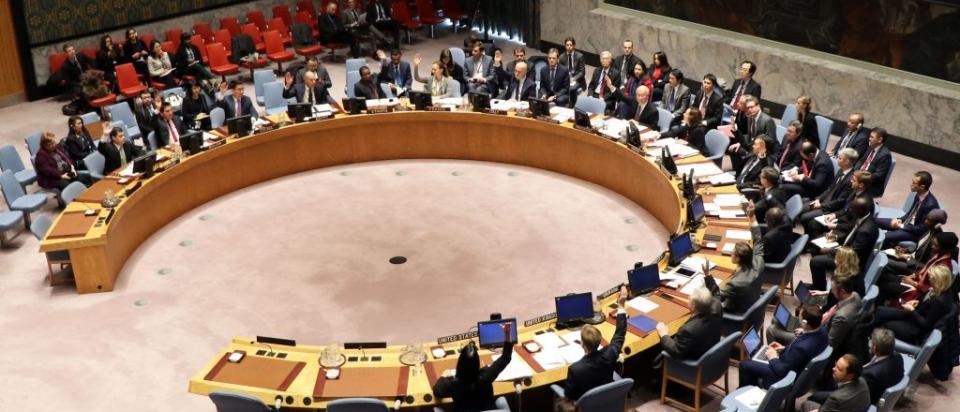
The Global Center hosted a high-level event inviting civil society representatives to share reflections on the 2021 report of the Secretary-General on the Activities of the United Nations system in implementing the United Nations Global Counter-Terrorism Strategy and the seventh review of the Strategy. The event served as a formal opportunity for member state and UN representatives to hear directly from a wide range of civil society actors as part of the review process and complimented the informal, member states-only briefing organized by the UN Office of Counter-Terrorism (UNOCT) held on Friday the 5th of March.  

The event was opened by the Co-facilitators of the seventh review of the Strategy, their Excellencies the Permanent Representatives of Oman and Spain, Ambassadors Mohamed Al-Hassan and Agustín Santos Maraver in which they welcomed the initiative and highlighted the role of civil society in preventing and countering terrorism and violent extremism, and the importance of collaborating with civil society.

The panel of civil society discussants consisted of Ms. Sarah Cliffe, Executive Director of the New York University Center on International Cooperation; Ms. Mallika Iyer, Asia Programs Coordinator and Humanitarian Action Specialist of the Global Network of Women Peacebuilders; Ms. Ornella Moderan, Head of Sahel Programme of the Institute for Security Studies; and Mr. Mandeep Tiwana, Chief Programmes Officer of CIVICUS. Discussants spoke on a range of topics, including the Secretary-General’s Prevention Agenda, successful approaches to prevention in complex security environments, the need to account for the impact of counterterrorism measures on humanitarian efforts, the need to ensure evidence-based policy and program development which mainstreams human rights and gender consideration, and ways in which member states and the UN can better safeguard civic space while countering terrorism and preventing violent extremism. Also, the Special Rapporteur on the promotion and protection of human rights and fundamental freedoms while countering terrorism, Professor Fionnuala Ní Aoláin offered her response to the discussants.

Interventions from the floor were made by a diverse set of civil society organizations representing diverse geographic regions and thematic priorities in the Strategy review. Final reflections were offered by Mr. Raffi Gregorian, Deputy Under-Secretary General and Director of the UNOCT, H.E. Silvio Gonzato, Deputy Head of the EU Delegation to the United Nations and member state representatives.

For more information on the Global Center’s events, including its roundtable series, please contact Ms. Franziska Praxl at fpraxl@globalcenter.org.

This report, the fifth in the “Blue Sky” series, explores how the UN’s comparative advantage can be leveraged to improve the policy development, interagency coordination, delivery, and impact of counterterrorism and preventing violent extremism efforts in support of the United Nations Global Counter-Terrorism Strategy. It first observes the growth of the Strategy and UN counterterrorism efforts in response to the evolving security landscape, resulting in a sprawling institutional architecture and array of programming that require considerable focus to coordinate and lead. Second, the report places counterterrorism and preventing violent extremism efforts within broader UN reforms to advance a prevention-forward approach that creates opportunities for greater integration across the UN’s pillars of human rights, peace and security, and development. Third, it assesses efforts to implement the Strategy at the global, institutional, and programmatic levels in a manner that systematically accounts for human rights and promotes transparency and accountability.

The recommendations focus on (1) calibrating the UN counterterrorism architecture; (2) situating UN counterterrorism efforts within the prevention framework; (3) engaging and supporting civil society; (4) mainstreaming human rights; and (5) assessing the Strategy’s implementation.

Summary findings and key recommendations were presented during a launch event held in July 2020, in the lead up to the Virtual UN Counter-Terrorism Week. Support for this project, including the consultations, high-level events, and report, was generously provided by the governments of the Netherlands, Norway, and Switzerland.