As governments consider effective responses to violent extremism, they must also decide how best to deal with those who have committed acts of violent extremism, particularly with regard to their rehabilitation and reintegration. Though it is their mandate, governments cannot undertake the rehabilitation and reintegration challenge alone. Civil society organizations can be well-placed to assist with or lead on various components and should be involved in planning and implementation. This action agenda builds on a 30 month project funded by the U.S. Department of State to explore the role of civil society organizations in rehabilitation and reintegration in three broad regions: the Sahel, the Greater Horn of Africa, and Southeast Asia. The action agenda offers guiding principles, recommendations, and examples to help stakeholders shape rehabilitation and reintegration practices and better incorporate the experiences and knowledge of civil society organizations.
It Takes a Village
This policy brief establishes a framework to develop and evaluate National Action Plans (NAPs) on preventing and countering violent extremism (P/CVE). Based on the key good practice components identified in international literature on NAPs across policy fields ranging from sustainable development to tuberculosis control, this framework aims to improve approaches to P/CVE strategic planning by national authorities. It may enable a range of stakeholders to better assess the strengths and weaknesses of new or existing P/CVE NAPs, as well as provide basic guidelines to support and further improve their development, implementation, monitoring, and evaluation.
Violent extremism is a key issue on the regional security agenda in East Africa. However, our review of the relevant literature, complemented by original primary research, suggests that the evidentiary baseline regarding violent extremism in East Africa is modest. The existing literature focuses largely on Somalia and Kenya and serves to underscore that mobilization to extremist violence in the region is diverse. These findings have important implications for development actors seeking to advance “countering violent extremism” (or sometimes “preventing violent extremism”) measures in East Africa. Those measures should be variegated across the states in the region. More generally, development actors seeking to advance countering violent extremism measures in East Africa or elsewhere should ensure that their approaches are evidence-based, responsive to the problems they are designed to address, proportional in light of existing development and security priorities, and effective.
The research for this article was conducted as part of the Global Center’s program to produce a rigorous literature review of drivers of radicalization and extremism in Eastern Africa under the East Africa Research Fund of the UK Department for International Development.
This article was published in African Security Volume 11, Issue 2 (2018) pp. 160-180.
Building on its previous analyses of the UN’s counterterrorism programs, the Global Center, with the generous support of the governments of Norway, the Netherlands, and Switzerland, has produced an independent report containing recommendations to support multilateral efforts to address terrorism and violent extremism in advance of the sixth review of the UN Global Counter-Terrorism Strategy (GCTS) in June. In addition to identifying ways to improve the development, coordination, delivery, and impact of the UN’s efforts, the report looks at what can be done to ensure that the sixth review can be used to more systematically assess the effectiveness of the UN efforts to support the implementation of the Strategy at headquarters, on the ground, and, importantly, between the two. The aim, therefore, is to lay the ground work during the sixth review to ensure that the seventh review in 2020 and subsequent ones can more rigorously take stock of the progress made by member states and by the United Nations to further the implementation of the GCTS.
Multilateral development actors have recently embraced the ‘PVE’ (preventing violent extremism) agenda. This includes consideration of PVE measures in countries like Uganda, where interpretations of non-state violence are contested and where the government has a history of strategic rent-seeking behavior regarding counter-terrorism assistance. This article assesses the threat of terrorism and violent extremism in Uganda. We argue against a strategic reorientation towards PVE among development actors. Current and emerging threats do not justify a departure from existing development priorities. Importantly, consideration of the political context pertaining to PVE in Uganda commends a cautious approach.
The research for this article was conducted as part of the Global Center’s program to produce a rigorous literature review of drivers of radicalization and extremism in Eastern Africa under the East Africa Research Fund of the UK Department for International Development.
This article was published in Conflict, Security & Development Volume 18, Issues 2 (2018) pp. 159-179.
Based on his experience policing during the Troubles in Northern Ireland and supporting the police reform process following the Good Friday Agreement, Stephen White offers a practitioner’s perspective on how police-community relations eventually were moved from a place of distrust in certain sections of society to one of wider acceptance and partnership. The policy brief highlights how implementing a comprehensive community policing strategy can serve as a means and an end in itself when dealing with drivers of intercommunal violence and violent extremism. The brief concludes to offer a cause for optimism along with an evidence-based template for reforms that others may wish to consider when undertaking comprehensive security sector reforms to aid in peacebuilding and the prevention and countering of violent extremism context.
As countries become better at detecting, investigating, and prosecuting terrorism suspects, including returning foreign terrorist fighters, prison services across the world are faced with a growing number of terrorism offenders in their institutions. The presence of these violent extremist offenders (VEOs) in the justice system poses new challenges to prison and probation services as well as to a range of other stakeholders and intervention providers involved in their management, rehabilitation and reintegration.
There is a clear urgency to address radicalization and recruitment to violent extremism in prisons and effectively reintegrate terrorism offenders. Yet the lack of understanding of the extent of the problem has led many governments to implement hasty solutions based on untested assumptions and anecdotal evidence. This article explores the challenges and issues regarding prison management and the process to rehabilitate and reintegrate VEOs. This essay is part of the 2017 Global Terrorism Index (GTI).
Civil society organizations represent a bulwark against violent extremism. Civil society organizations across South and Central Asia, many of which focus on development, conflict prevention, peace-building, and human rights, have leveraged their experience in these areas to develop innovative preventing and countering violent extremism (P/CVE) programs targeting a broad spectrum of issues confronting their communities. These initiatives include producing educational entertainment that challenges extremist narratives, improving relationships between communities and local government, and promoting research and understanding to better recognize local factors contributing to the spread of violent radicalization.
To help advance these efforts, the Global Center with support from the U.S. Department of State, undertook a two-year program to support civil society organizations in South and Central Asia in the development of contextually tailored and locally relevant responses to violent extremism. It concludes with key recommendations for policymakers, practitioners, and donors to consider as they look to initiate or increase support for P/CVE initiatives in South and Central Asia.
The UN Security Council Counter-Terrorism Committee Executive Directorate (CTED) was established in 2004 with the core mission of supporting the Counter-Terrorism Committee (CTC) in monitoring the implementation of counterterrorism obligations required by Security Council Resolution 1373 and facilitating technical assistance to member states to aid their implementation activities. Since 2004, however, CTED’s mandate has expanded considerably in response to the evolution of the threat and the increased number of stakeholders benefiting from CTED assessments and analyses, a group that includes not only the council itself, but also UN member states in general, regional and functional organizations, and other counterterrorism-relevant entities inside and outside the UN system.
This policy brief looks at CTED’s role in light of the need to maintain and strengthen its comparative advantage in assessing member states’ counterterrorism efforts while addressing existing and emerging threats of terrorism and aligning its working methodologies with these developments. It also assesses what CTED and the CTC can do to enhance coordination with partners within and outside the UN system. It then examines the benefits and limitations of CTED’s outputs in relation to its mandate, comparative advantage, capacity, and impact, and concludes by offering some ideas and recommendations for the Security Council, the CTC, and CTED to consider for the next four years and beyond.
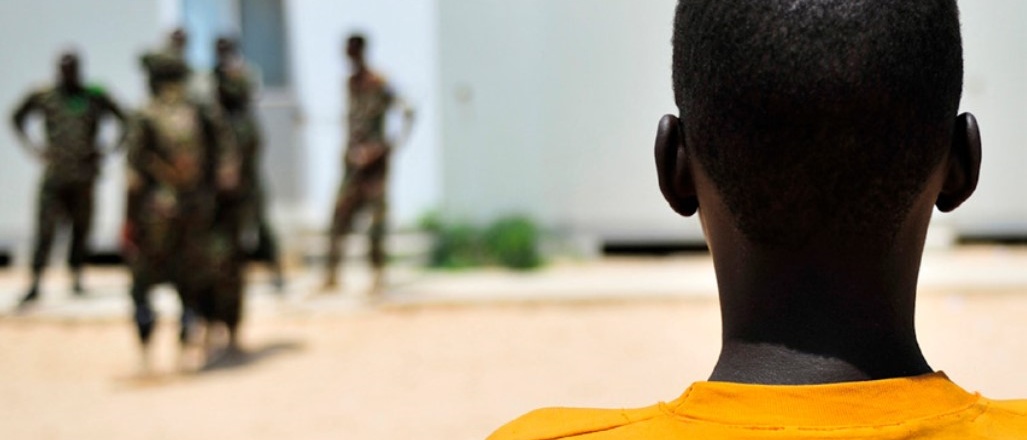
Children have always been among the most vulnerable victims of violence and, at times, some of its brutal purveyors. They have played various roles in furthering violent extremism and participating in acts of violence, ranging from inciting propaganda online to carrying out deadly attacks. Rather than exceptionalizing these children, their treatment under the criminal justice system should be grounded in juvenile justice standards.
To advance the work of the Global Counterterrorism Forum (GCTF), the government of Australia commissioned the Global Center and the International Centre for Counter-Terrorism – The Hague (ICCT) to prepare a report and accompanying policy brief putting forward guiding principles, recommendations, and considerations for the detention, rehabilitation, and reintegration of juveniles convicted of terrorism and violent extremism offenses. Together, they advance a juvenile justice approach for authorities responsible for the care of juvenile violent extremist offenders and support the notion that national security interests and juvenile justice imperatives are compatible and mutually reinforcing in preventing and countering violent extremism.
Responding to a call from the GCTF Neuchâtel Memorandum on Good Practices for Juvenile Justice in a Counterterrorism Context to collect and collate information on children engaged in terrorism-related activity, the report takes stock of theory, policies, and practice globally. The recommendations draw from international juvenile justice standards, the emerging body of principles and practices in the detention of adult violent extremist offenders, and the national experiences in demobilizing and reintegrating child combatants and members of organized criminal groups.
The report elaborates on the policy brief that was formally adopted by the GCTF in December 2016. The policy brief was adapted for publication in EuroVista’s Probation and Community Justice Journal, available at http://euro-vista.org/.